
- Dunapack Packaging
- Company
- News and Blog
- Types of Containerboard – What You Should Know About Liners and Flutings
Types of Containerboard – What You Should Know About Liners and Flutings
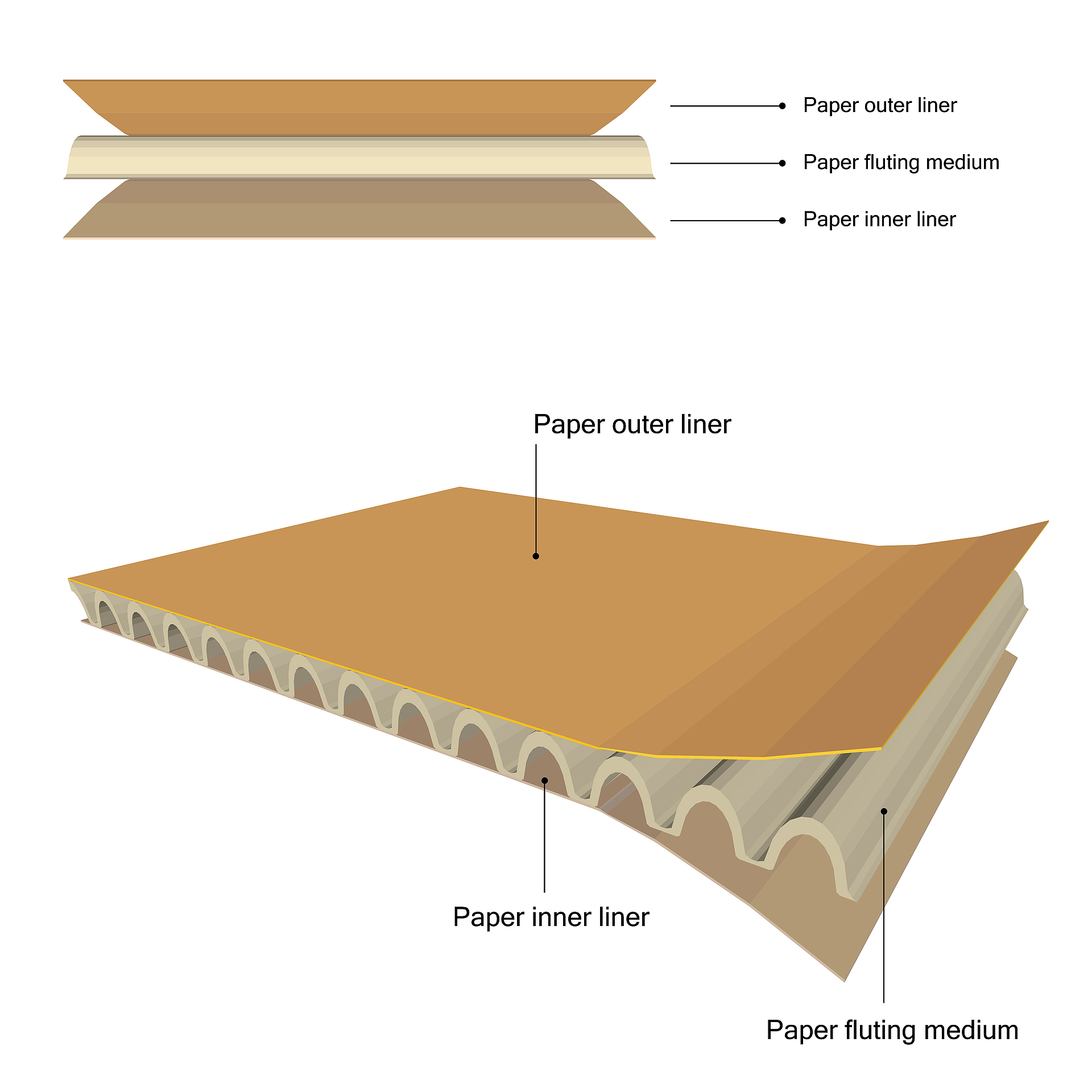
- Liners form the smooth outer and inner surfaces of the board. They determine the appearance and partially the strength of the packaging.
- Fluting is the corrugated medium between the two liners. It acts like a “paper spring”: it absorbs shocks and provides rigidity to the board.
Both components must meet different optical and strength requirements based on their function.
How is a liner made white?
There are two main methods:
1. Bleached White Kraftliner
Made from bleached fibres — a strong, printable paper produced from virgin pulp.
In two-layer white kraftliners, the top layer consists of bleached hardwood kraft fibres. The bleaching process is carried out under completely chlorine-free (TCF) conditions.
The base layer is a blend of softwood fibres and a small amount of high-quality recycled fibres sourced from corrugated board.
White testliner is also available in different quality grades.
2. Coated White Testliner (milled/coated white recycled liner)
A premium recycled-based paper with a coated surface that provides excellent printability and high visual quality.
This is also a two-layer construction: beneath the coating there is a layer of white recycled fibres, and the base layer consists of brown recycled fibres.
Coated white kraftliner is also available on the market.
Advantages and limitations
- White or coated liners:
✔ Excellent printability
✔ Aesthetic, high-quality appearance
✔ Suitable for branding and premium packaging
✘ Higher price point - Brown liners:
✔ Sustainable and cost-efficient
✔ Naturally appealing look
✘ Limited print performance
Types of liners by strength
Kraftliner
- Contains virgin fibres → very high strength and moisture resistance
- Ideal for export packaging, industrial use, heavy loads, and cold-chain packaging
Testliner
- Made from 100% selected, high-quality recycled fibre
- Excellent price–performance ratio
- Suitable for standard packaging applications
Schrenz / Srenc
- 100% recycled paper made from unselected, lower-quality recovered fibre
- Typically grey or grey-brown due to its mixed fibre content
- Uncoated, rough surface
- Commonly used as an inner liner or for low-performance applications
Fluting provides the backbone of the board: mechanical strength, rigidity, and impact resistance. Just like liners, it can be produced from virgin or recycled fibres.
Main types
SC-Fluting (Semi-Chemical Fluting)
- Made from virgin fibres
- High tensile strength and good moisture resistance
- Recommended for export packaging and heavy-duty applications
Recycled Fluting / Wellenstoff
- Made from 100% recycled fibres
- Sustainable and cost-effective
- Ideal for standard packaging needs
“Wellenstoff” is a German term commonly used for recycled corrugating medium.

Virgin fibre-based grades (kraftliner, SC-fluting)
✔ High strength
✔ Good moisture resistance
✔ Suitable for overseas export, heavy industrial goods, and sensitive products
Recycled grades (testliner, srenc, wellenstoff)
✔ Sustainable
✔ Economical
✔ Ideal for general packaging applications and normal load requirements
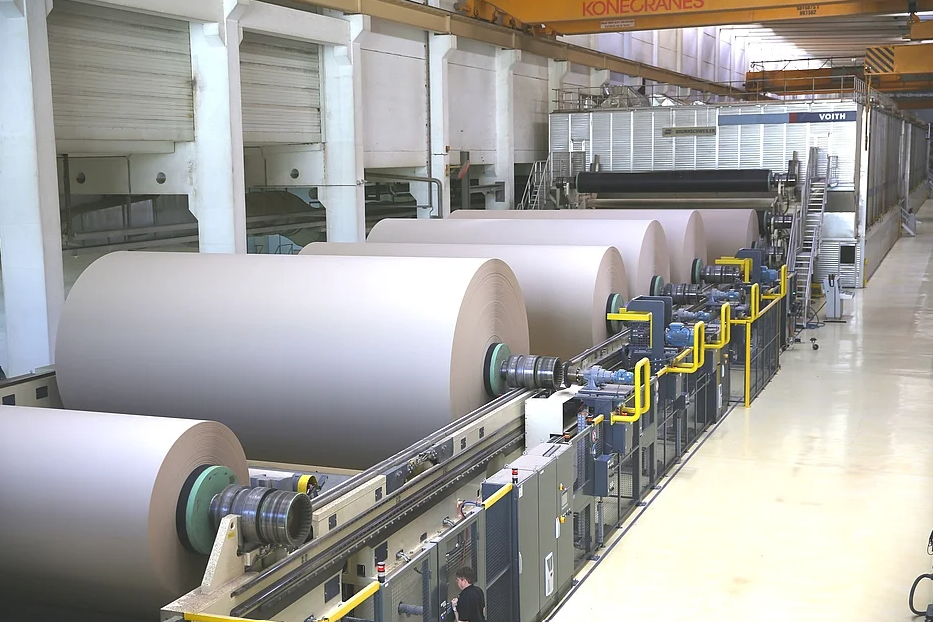
In Hungary, containerboard is produced exclusively by Hamburger Hungária Kft., the Dunaújváros paper mill of the Austrian family-owned Prinzhorn Group.
Their “Austro” branded products are exported at a rate of around 80%.
Their portfolio consists entirely of recycled-based grades, including:
- AustroLiner 2 and AustroLiner 3 liner papers
- AustroFluting Plus, AustroFluting-R, AustroWelle, and AustroWelle Light corrugating mediums
Available in a grammage range of 80–175 g/m².
The liner–fluting combination determines:
- the mechanical strength of the packaging
- printability and visual quality
- packaging costs
- environmental performance
Kraft-based solutions are ideal for premium and heavy-duty applications, while recycled papers offer a sustainable and cost-effective alternative for the majority of packaging needs.
You can explore the product portfolio of Hamburger Containerboard here: Products - Hamburger Containerboard