- Dunapack Packaging
- Company
- News and Blog
- How Is Corrugated Board Turned into Finished Packaging?
How Is Corrugated Board Turned into Finished Packaging?
1. Selecting the Right Corrugated Board
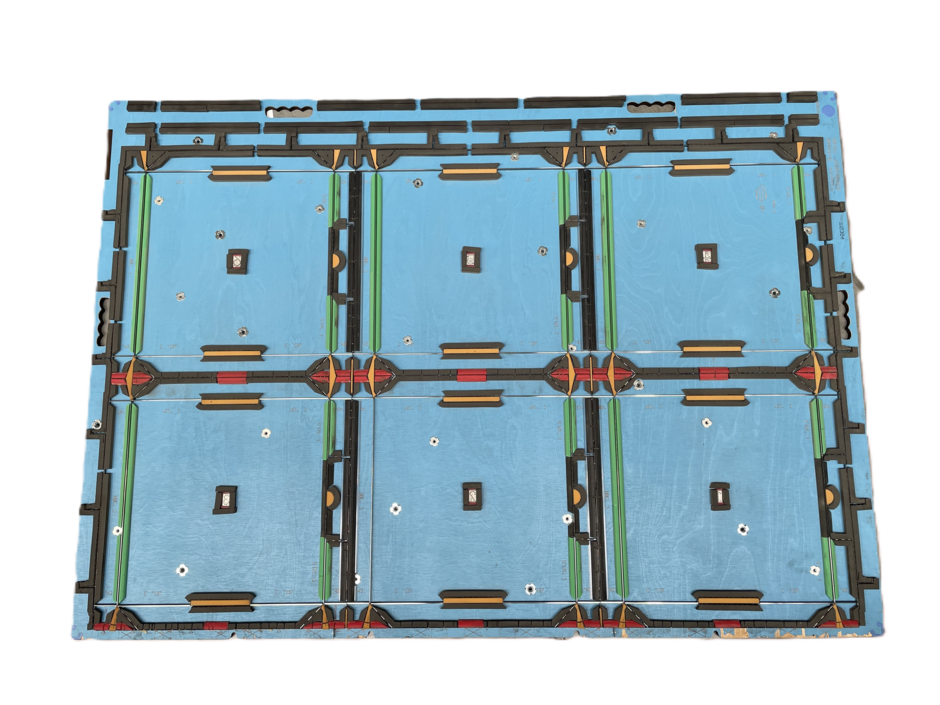
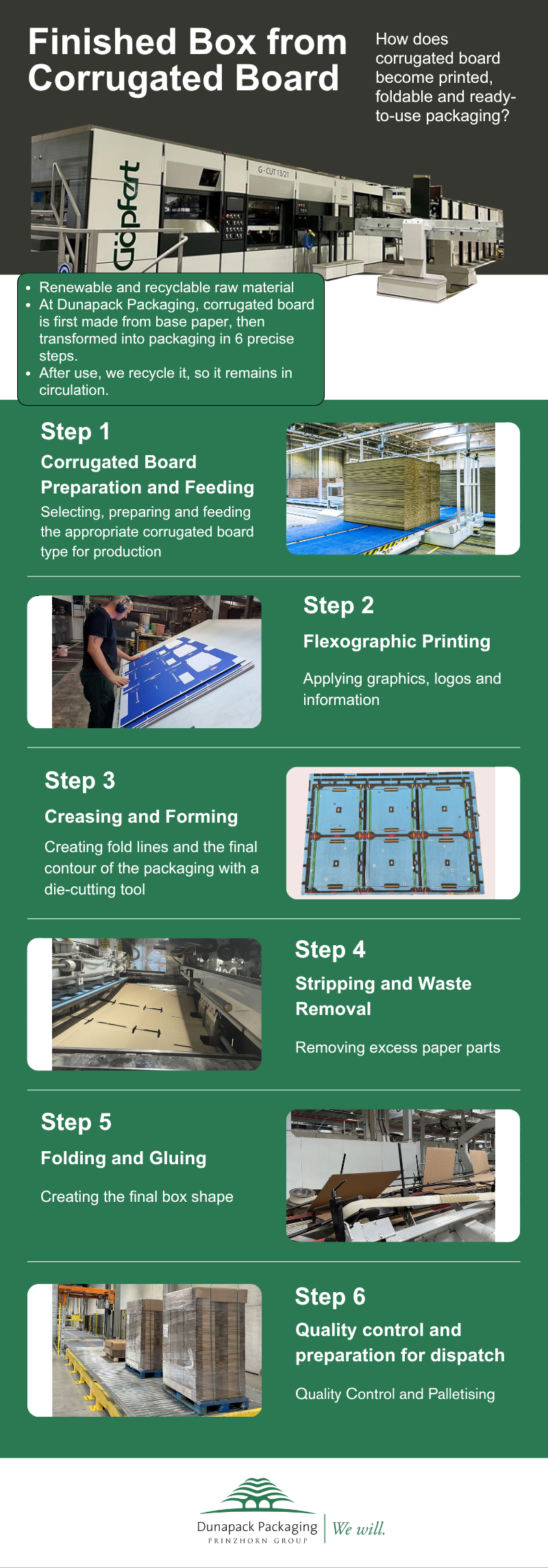
Packaging production begins with selecting the right material. Different products require corrugated board with different strength, thickness, and flute profiles. Before production, each batch is checked for sheet dimensions, flute direction, thickness, moisture content, surface quality, and any signs of damage.
The production data is then prepared, and the required printing, creasing, and manufacturing parameters are set. Precise preparation is essential both for efficient downstream processing and for consistent quality.
2. Printing – Bringing the Packaging to Life
The first visible transformation of corrugated board takes place during printing. Modern flexographic printing technology applies logos, product information, barcodes, handling symbols, and the graphic elements that define the brand’s appearance, using the colors specified by the customer.
Printing, however, is far more than an aesthetic feature. Packaging also serves as a communication platform, conveying information to logistics providers, retailers, and end users.
Throughout production, color accuracy, print position, color registration, and ink coverage are continuously monitored. Modern flexographic printing uses water-based inks, combining high print quality with a more environmentally responsible solution.
Did You Know?
A single corrugated box can contain tens of thousands of tiny ink dots. Special anilox rollers meter the ink with exceptional precision, ensuring both excellent print quality and efficient ink consumption.

3. Creasing and Converting – The Box Takes Shape
The printed corrugated board then passes through the converting operations. At this stage, the fold lines, cut-outs, flaps, openings, and final packaging profile are created.
In the industry, the fold lines are known as creases. They ensure that the box can later be folded accurately without damage. Modern tooling operates with a high degree of precision, keeping the dimensions and design of every package consistently uniform.
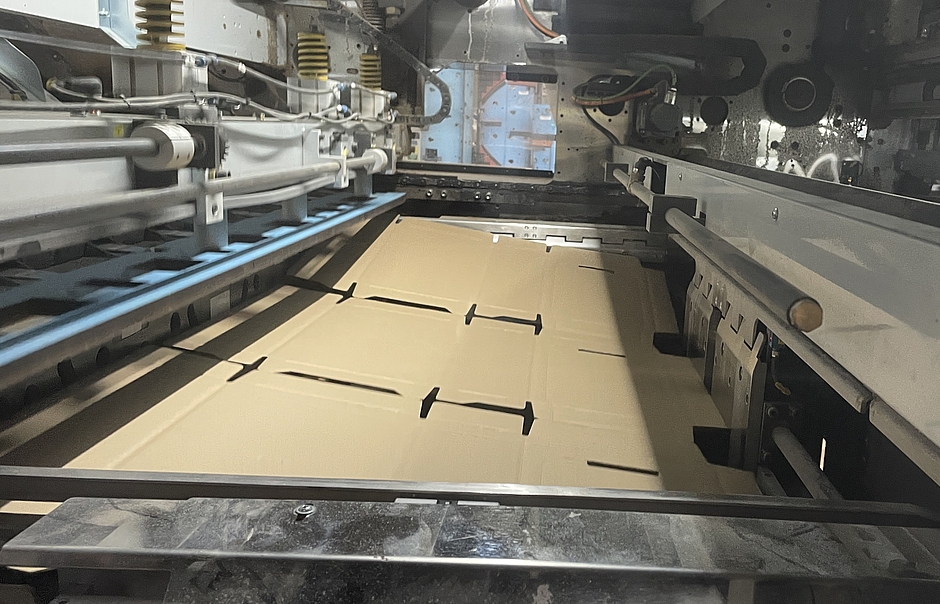
Did You Know?
Producing a complex package may require several hundred individual tooling components. Die-cutting tools are made up of special steel rules and creasing elements that work together to create the final product shape.
Expert Insight: Why Is the Packaging Design Stage Important?
The quality of finished packaging is not determined by manufacturing alone. The right dimensions, structural design, material selection, and printing solution can significantly influence product protection, transportation costs, and sustainability performance.
For this reason, every successful packaging solution begins by aligning customer requirements with manufacturing capabilities. Today, modern packaging development is not simply about creating a box; it is about designing an efficient, cost-effective, and sustainable system.

4. Waste Removal and Separation
After converting, the sections of board that do not form part of the finished product are removed. This step ensures that the finished item is clean, contains no waste pieces, and can be folded smoothly in subsequent operations.
Complete removal of internal waste is particularly important for packaging with more complex designs, where even the smallest remnant can affect subsequent processing.
5. Folding and Gluing – Completing the Box
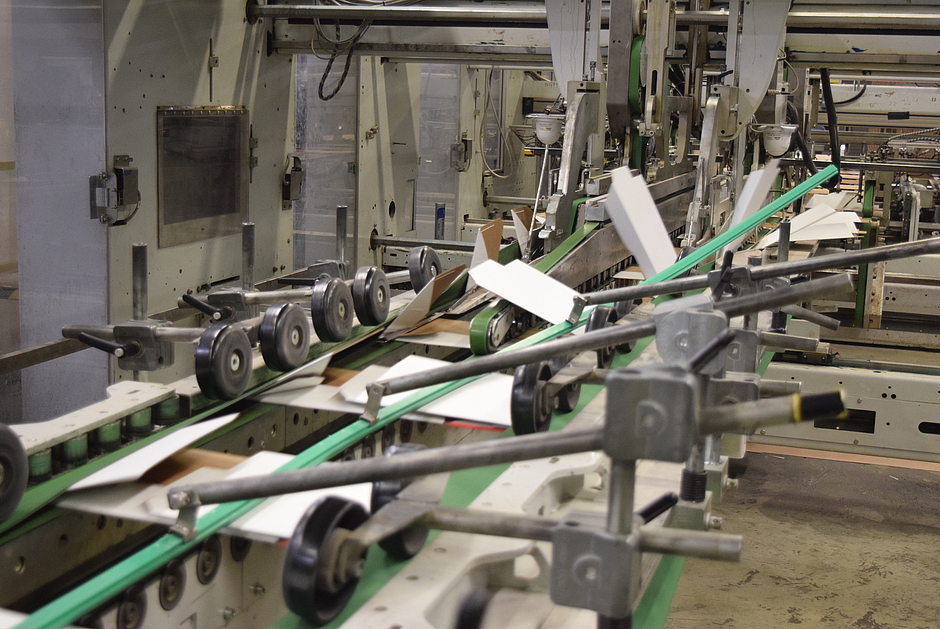
The converted blanks are then folded. The creases created earlier guide the board into the box’s final shape.
Specialized gluing systems then apply the required amount of adhesive. Throughout the process, production equipment and inspection points ensure bond quality, accurate joints, and dimensional consistency in the finished product.
Did You Know?
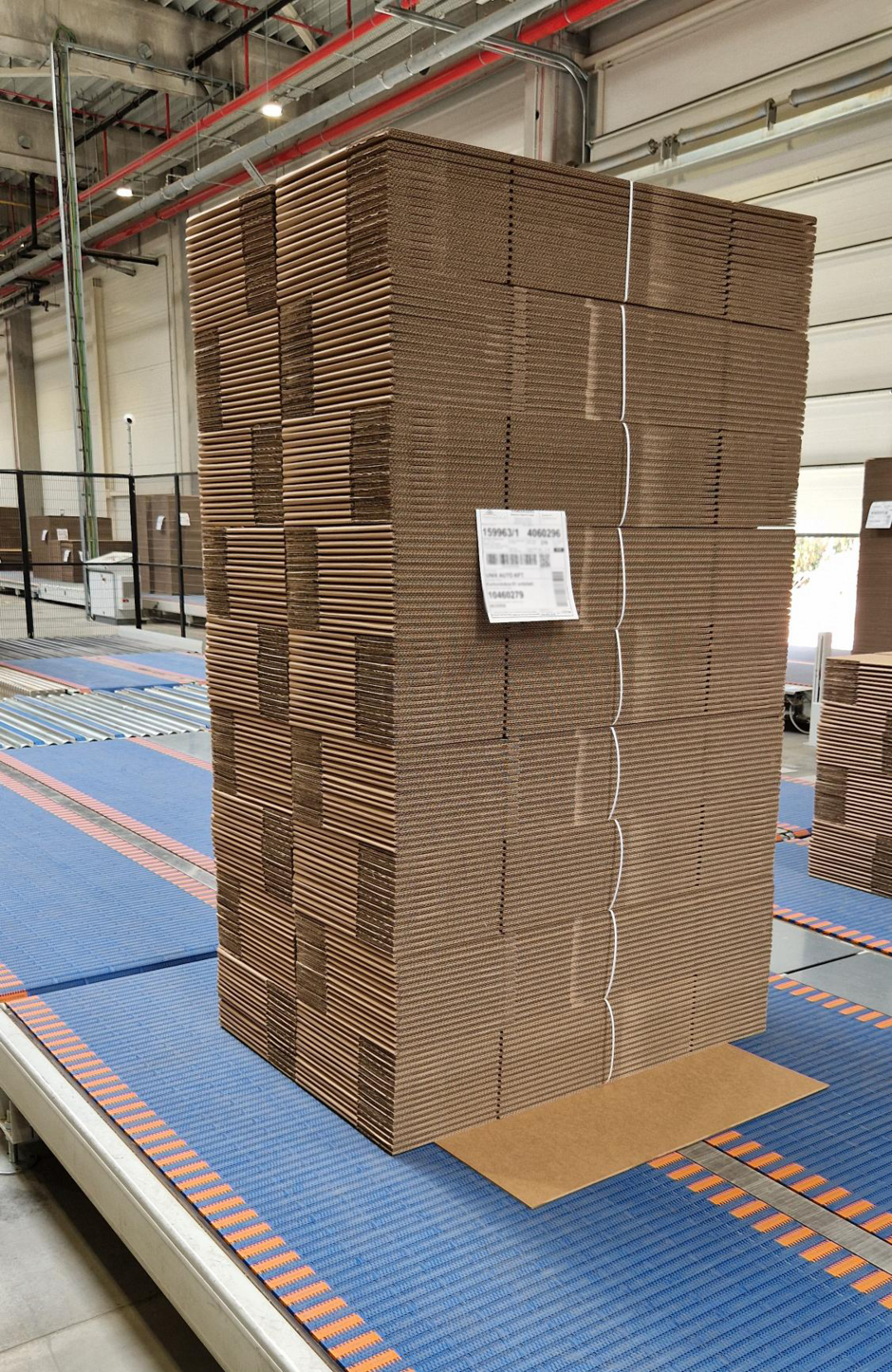
A modern folder-gluer can produce tens of thousands of boxes per hour. Even at high speeds, automated technology delivers consistent quality—an essential requirement for high-volume production.

6. Quality Control and Preparation for Dispatch
Finished packaging undergoes quality control for every production batch. Checks include dimensional accuracy, print quality, folding quality, bond strength, and the product’s overall appearance.
In modern packaging production, quality is not checked only at the end of the manufacturing process. At Dunapack Packaging, inspection points play a key role throughout the entire process, helping to ensure consistent product quality and reliable delivery performance.
After inspection, the products are bundled, palletized, and stretch-wrapped so they can be transported safely to customers.
More Than Just a Box
Behind every corrugated package is a complex technological process, modern production equipment, and extensive professional expertise. Precise printing, accurate converting, careful folding, and reliable gluing work together to ensure that every finished package meets the highest quality standards.
Dunapack Packaging aims to provide customers with corrugated packaging solutions that support product protection, logistics efficiency, brand presentation, and the achievement of sustainability goals.
