
- Dunapack Packaging
- Company
- News and Blog
- Types of Corrugated Board – Which Is the Best Fit for Your Product?
Types of Corrugated Board – Which Is the Best Fit for Your Product?
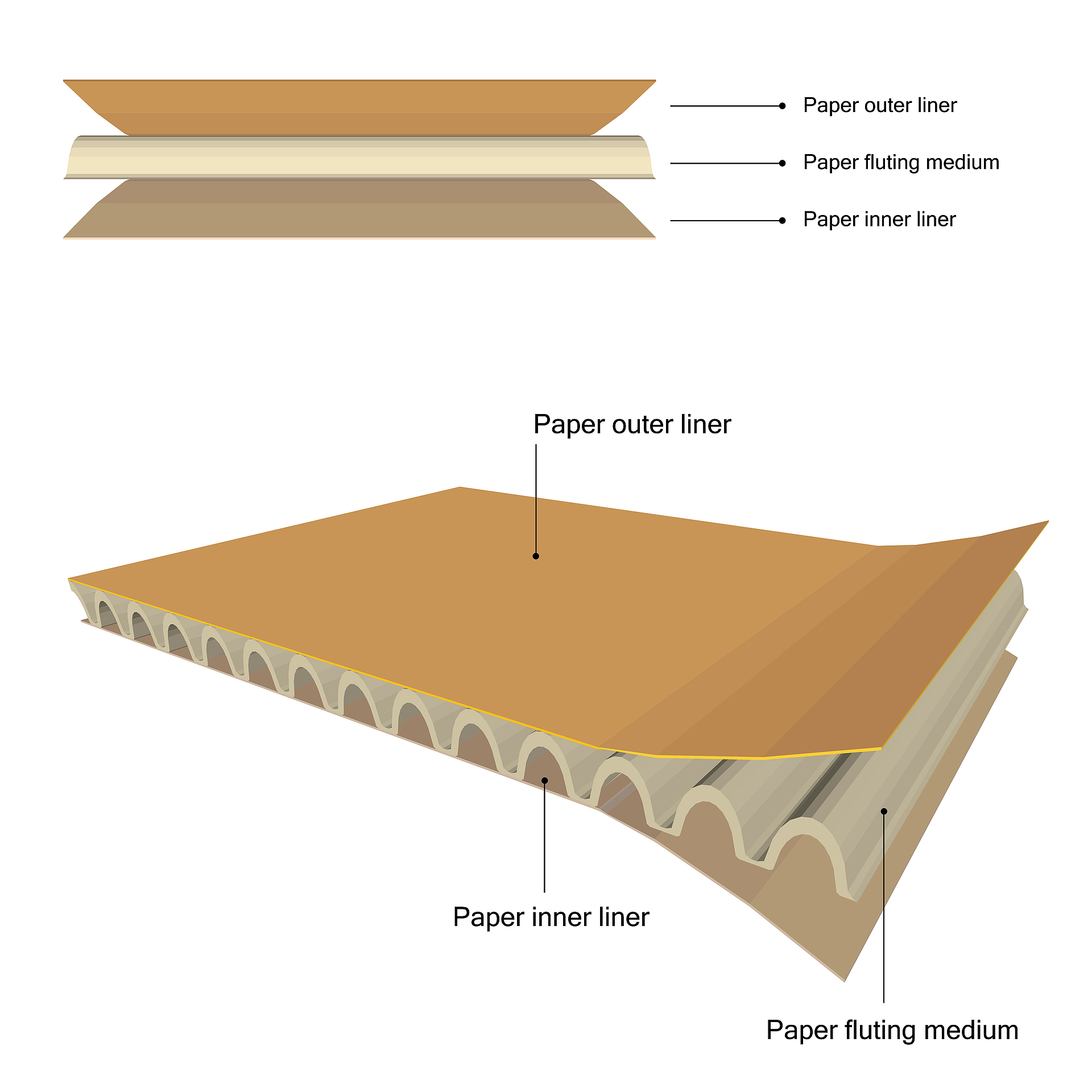
Corrugated board is made from two main components: liner (flat paper) and fluting (corrugated paper).
During production, the paper is shaped into waves using steam, heat, and mechanical pressure — hence the name “flute”, derived from the English word for flute or groove, referring to the repeated, wave-like structure of the middle layer.
This fluted layer is then glued between one or more flat liners.
The number of layers determines the board’s strength and thickness — the more layers, the higher the load-bearing capacity and product protection.
Production precision — including moisture control, temperature, and adhesive quality — plays a key role in ensuring consistent performance under different logistics conditions.
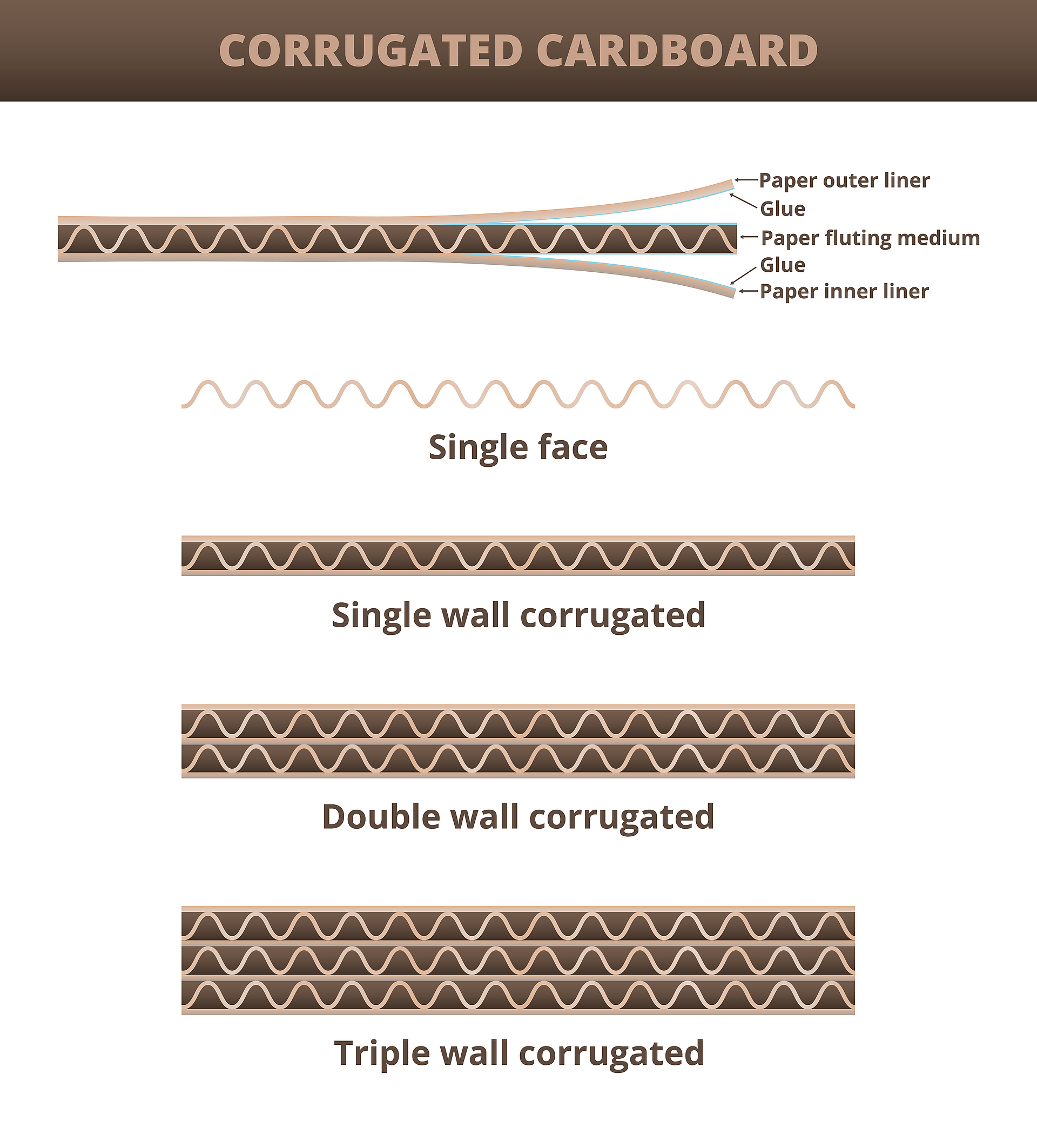
Corrugated packaging is typically grouped into three main categories:
- Single wall (three-layer): two liners + one fluting
→ The most common type, offering good load-bearing capacity and cushioning for most products. - Double wall (five-layer): three liners + two flutings
→ Extra stability, suitable for heavier goods, exports, or industrial applications. - Triple wall (seven-layer): four liners + three flutings
→ Special heavy-duty structure for maximum strength — used in automotive and heavy industry packaging.
Different flute profiles are identified by letters (A, B, C, E, F, D, etc.).
These are not abbreviations but simple identifiers introduced in the 1920s–30s, following the order of industrial development.
Each flute type affects three main characteristics:
- Board thickness – higher flutes make thicker boards
- Cushioning performance – higher flutes provide better shock absorption
- Print quality – lower flutes create smoother surfaces for high-quality printing
Fun fact:
- The A-flute was the first industrially used profile (about 4.8–5 mm high), hence its “A” designation.
- Then came B-flute, a lower and denser profile, followed by C, E, F, and others.
- The letters do not represent thickness order, but rather the chronological order of their introduction.
Single Wall (Three-Layer) Types
- E-flute (~1.6 mm): Thin, elegant, premium look with excellent print surface → cosmetics, small consumer goods
- B-flute (~2.8 mm): Strong with a smooth surface and efficient space usage → beverage multipacks, FMCG
- C-flute (~4.5 mm): Balanced strength and cushioning → food industry packaging
- D-flute (~2 mm): Thinner yet durable → space-saving packaging solutions
Double Wall (Five-Layer) Types
- EE-flute (~3 mm): Decorative premium surface + stability
- EB-flute (~4.8 mm): Strong and printable → marketing and highlighted product packaging
- BB-flute (~6 mm): High load-bearing capacity → heavy goods
- BC-flute (~7 mm): Classic export packaging solution
- ED-flute (~3.5 mm): Great printing surface + protection → displays
- DB-flute (~5 mm): Strong and space-efficient
Triple Wall (Seven-Layer) Types
- Special heavy-duty boxes designed for automotive and industrial use.
- Available at our Mosonudvar site.
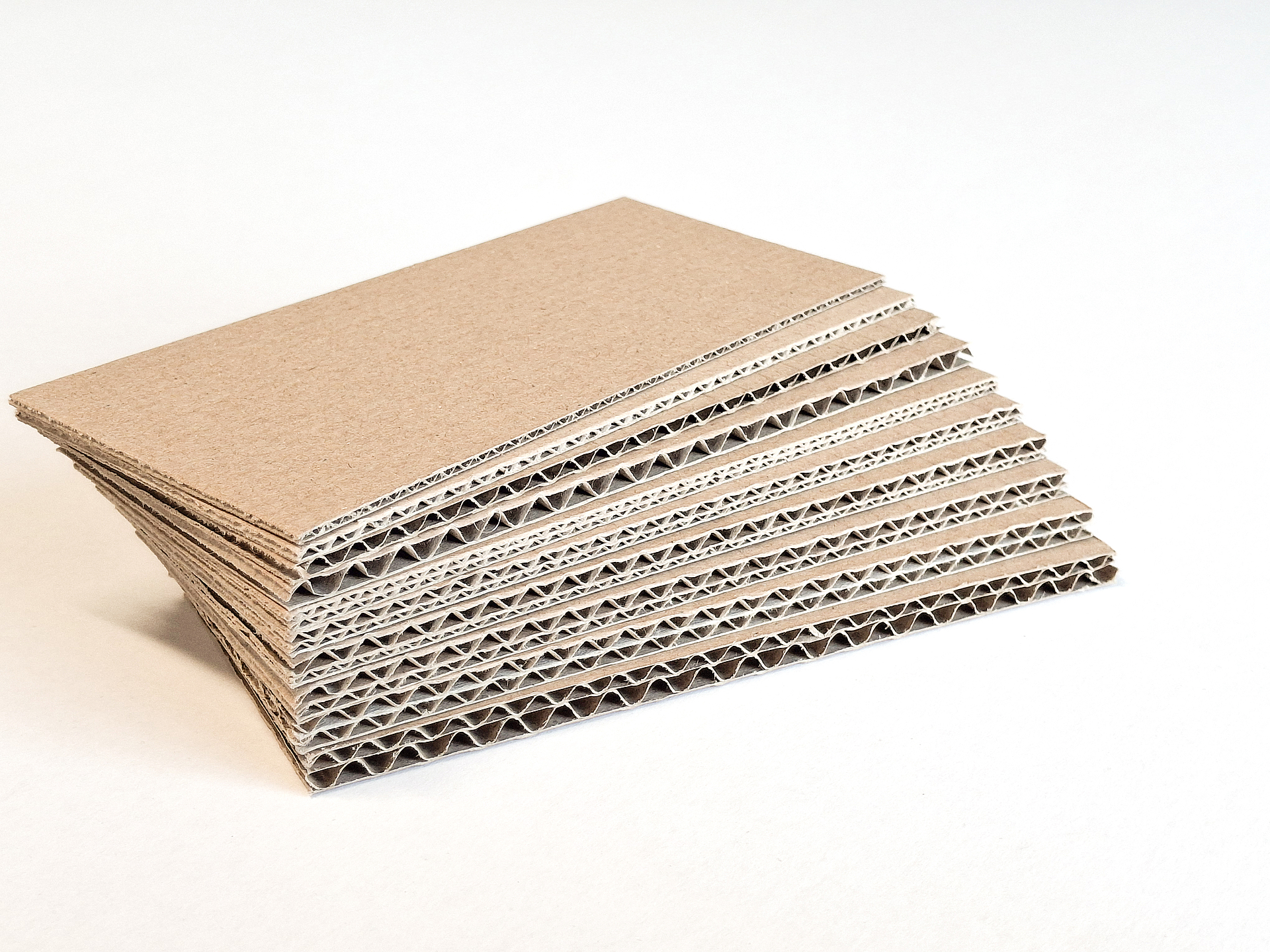
The number of layers and the flute profile determine a corrugated box’s strength, cushioning, and printability.
By matching the structure to your product’s requirements and logistics environment, you can always achieve the most efficient and protective packaging solution.
Explore our product range: https://www.dunapack-packaging.com/products/